Fish and chips is one of the few national dishes with a paper trail. It was not invented in a grand kitchen or handed down by a celebrated chef. It grew out of two separate street trades — one selling fried fish, the other selling fried potatoes — that took hold in the crowded, smoky towns of nineteenth-century Britain. When the two finally shared a counter, a national habit was born: hot, cheap, salty food you could eat with your fingers on the walk home from work or on a windy seafront bench.
Fried fish comes first
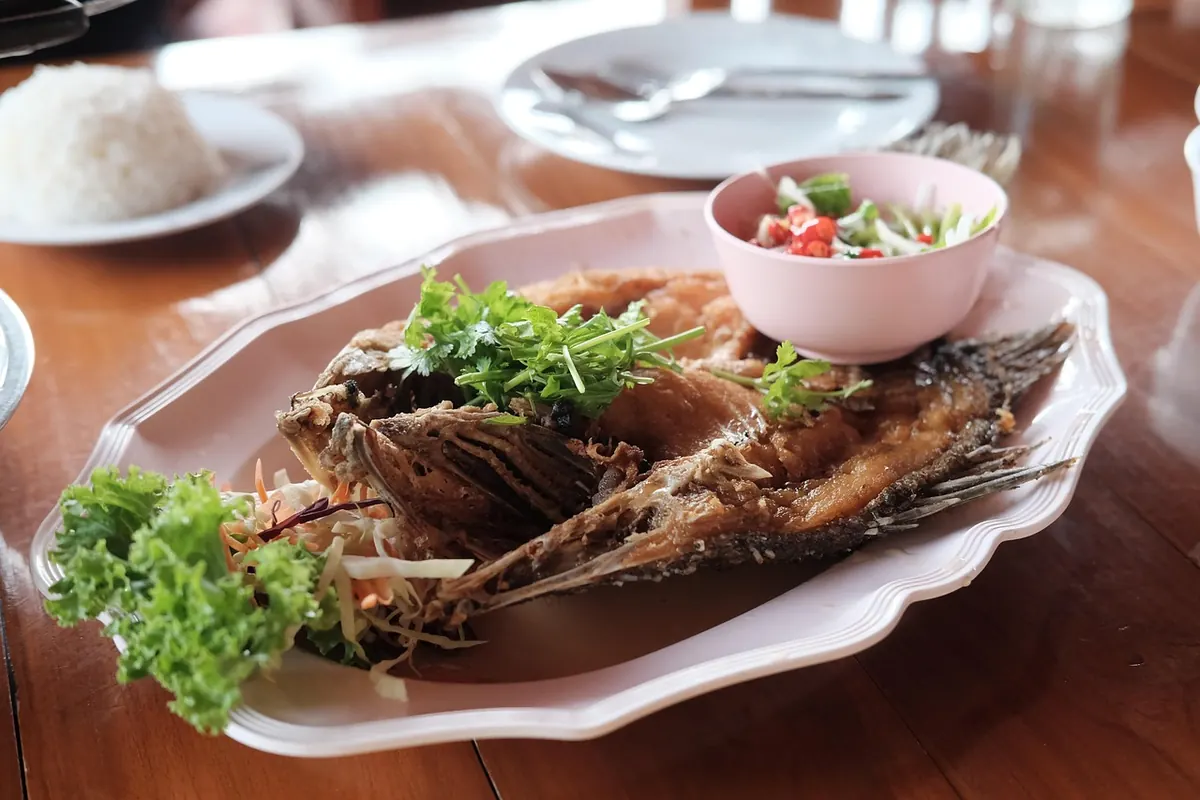
Sephardic Jewish families, many with roots in Portugal and Spain, settled in London from the seventeenth century onwards and brought with them a way of frying fish in a thin batter. The dish they sold, pescado frito, was cooked in oil and eaten cold, and in the East End it became a proper street trade. Vendors worked from trays, handcarts and small shops, selling portions of cold fried fish with bread and a baked potato.
By the 1830s the trade was established enough to turn up in fiction: Charles Dickens mentions a "fried fish warehouse" in Oliver Twist. Note what that tells us. Fried fish was a takeaway food from the start — bought on the street, carried home, eaten with whatever else was cheap that day.
Then came the chip
Potatoes cut into strips and cooked in hot fat spread across Britain in the early nineteenth century, following the same idea as pommes frites on the other side of the Channel. British chips were thicker than French fries, cooked in beef dripping and served from big open pans. Potatoes were cheap, filling and available nearly everywhere.
By mid-century, "chipped potatoes" were being sold in markets and small shops, particularly in the industrial north, where money was short but appetites were not. It was a standalone trade: a bag of chips, a sprinkle of salt, and back to work.
The two trades become one
Two names come up again and again in the story of the merger. In Bow, in London's East End, Joseph Malin — a Jewish immigrant — is credited with opening a shop that sold fried fish and chips together, around 1860. In Mossley, near Oldham, John Lees is said to have sold fish and chips from a wooden hut a few years later.
Nobody can prove which came first, and both places still claim the honour. What matters is that both stories describe the same thing: one counter, one price, a piece of fried fish and a pile of chips bought as a single meal. That was the invention, and it was not really a recipe at all. It was a business decision.
Fuel for the industrial towns
The spread was fastest in the mill towns of Lancashire and Yorkshire, the potteries, the shipyards and the mining villages. A shift was long and physical, and a fish supper was hot, high in calories, and cheap enough to be bought with loose change on the way home. Shops opened near factory gates and along terraced streets, often staying open late to catch workers coming off the late shift.
Friday was the big night. Fish on a Friday was already a habit for Catholic families abstaining from meat, and plenty of non-Catholics followed the same pattern, partly because Friday fitted payday.
War tested the trade and strengthened it. During the Second World War, when so much else went on the ration, fish and chips remained off it — one of the few hot meals a family could still buy without coupons. Shops were expected to keep frying, and they largely did.
From the factory gate to the seaside
If industrial towns made the chippy, the seaside made it a ritual. Railway travel from the 1840s put coastal resorts within reach of day trippers, and ports had fresh fish landed daily. Brighton, Blackpool, Whitby, Scarborough, Southend and Cromer all became places where fish and chips were eaten outdoors, in the wind, with one eye on the gulls.
The wrapping mattered as much as the frying. For generations, chips were parcelled in yesterday's newspaper over a plain white inner sheet, a practice that ended in the 1980s when food hygiene rules required clean wrapping. The smell of vinegar on newsprint is still the smell of a British holiday for anyone over forty.
What goes with it
Toppings and side orders are fiercely regional, and ordering the local thing is half the pleasure of visiting a shop in another part of the country.
- Scraps — the crunchy bits of batter from the fryer, scattered over the chips in Yorkshire and the north east.
- Mushy peas — dried peas soaked and cooked soft, standard across the north of England and the Midlands.
- Salt and sauce — vinegar mixed with brown sauce, the Edinburgh and Lothians default, instead of vinegar alone.
- Curry sauce or gravy — a pot of either, common in Wales, the Midlands and the north west.
- Pickled onions and eggs — the sharp, vinegary counterpoint to all that fat.
- Bread and butter, or a buttered barm in Lancashire, to make a chip butty.
- Tartare sauce and lemon — more usual in the south and at seaside shops.
And a note on naming: it is a chippy in England, a chipper in Scotland and Northern Ireland. Ask for a fish supper and you will get chips with it almost everywhere.
The chippy now
The trade has changed. Cod and haddock cost far more than they once did, and so does frying oil, which has closed a lot of family shops. Against that, many chippies now fry fish certified as sustainably sourced, offer gluten-free batter from a dedicated fryer, and cook in vegetable oil if beef dripping is not for you. A newer wave of shops has gone back to dripping, dry batter and better potatoes, and turned a cheap supper into something worth travelling for.
The core offer has not moved. Fish, chips, salt, vinegar, paper. It is still the cheapest hot meal in Britain that feels like a treat.
How to get the best from a fish and chip shop
- Go when the shop is busy. High turnover means fresh frying. A quiet chippy at three in the afternoon is not showing off its best work.
- Ask for the fish to be fried fresh if the ones under the lamp have been sitting. Most shops will do it; you will wait a few minutes and it will be worth it.
- Ask for salt and vinegar at the counter, and go lighter than you think if the parcel has a journey ahead. Vinegar softens batter fast.
- Do not seal the bag. Steam is the enemy of crisp batter. Leave the parcel open on the way home or in the car.
- Eat within about ten minutes if you can. Find a bench, a wall or a seafront railing, and don't apologise for the smell.
- Order the local side. Scraps in Yorkshire, salt and sauce in Edinburgh, mushy peas anywhere north of the Trent.
- Check the fryer for allergies. If you need gluten-free, vegetarian or vegan frying, ask about the batter, the oil and whether a separate fryer is used, and ask to see the allergen information before you order.
Photo: Taken / Pixabay